Showing posts with label guest post. Show all posts

Sunday, March 22, 2015

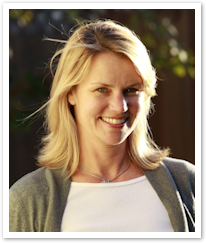
Guest Post: Using Real Locations in Fiction

Written by: Dana Michelle Burnett

When I’m reading a novel, one thing that really makes me feel connected to the story is the setting. Is it believable? Does it fit the story?

There are several books out there where the setting feels almost like an additional character. First coming to my mind is The Witching Hour by Anne Rice. The Mayfair house is as much a part of the story as the ghost that haunts it. Another example would be The Shade from A Shade of Vampire series by Bella Forrest, where the island is crucial to several elements of the story.

When I set out to write The Gifted and The Damned, I knew that I wanted the story to take place in a small town that had an old time, almost out of time, feel to it. As with my last two series, I chose Corydon Indiana, but this time for a very different reason.

It wasn’t the Civil War era homes that drew my attention this time. The entire town has feel of permanence. You can feel the history almost oozing up from the sidewalks. It made me wonder if it wouldn’t be possible for another, more paranormal history, to exist there as well.

Using an actual location gave a sense of reality to my work. If I was having trouble with a certain chapter, a quick walk through downtown Corydon would help me connect with my story and put me back on track.

Monday, November 24, 2014

Guest Post - Linda Appleman Shapiro, author of She's Not Herself: A psychotherapist's journey into and beyond her mother's mental illness

Why I chose to tell my story as a memoir instead of fiction

Although I offer the back story of how I came to write this memoir in the Afterword of the book, I'll answer your question as honestly and clearly as I can. I'll start by offering my belief in the importance of knowing oneself, acknowledging one’s strengths and talents, and recognizing ones's weaknesses and deficits.

I realized at some point that fictionalizing my story was not in the cards for me. My ah-ha moment came with the feeling that telling my own story in the form of a memoir might allow others to feel less isolated. Whether they had grown up with a parent, sibling, or child suffering from mental or physical illness, my hope was that they would better grasp the consequences of their situation by identifying with mine.

I also knew a couple of other things to be true for me:

To write about the same subject for a psychological journal would have been far easier. It would have been a combination of research and anecdotal stories from my family and from all the families I’ve treated. But I felt compelled to write a memoir instead and to share my story by showing how each of us survived -- despite the pain and the trauma – and leave readers with my first-hand experience of knowing about love, loss, and loyalty, along with the darker sides of life that shaped who I am but do not define me as a victim.

Going through life feeling totally victimized is not a way to live. It doesn't allow for real joy to be experienced. There isn't a positive way to be productive without moving through and beyond traumas. I say that without any intention of minimizing the effects of trauma, but with the knowledge that unless professional help is sought, or some means of healing are found, those of us who were, more or less, robbed of a childhood and parentified at too early an age, or others who lost their innocence to terrible forms of abuse . . . will never be able to climb out from under the despair that was imposed upon us.

So, while being a psychotherapist/addictions counselor for the past 30+ years and having written critical papers throughout my college and graduate school years, I’d never created stories from whole cloth. That’s an art form that takes knowledge and talent that I’d have to live many more years to develop. Knowing that from the start, I knew that I would never be writing a novel. I’ve been an avid reader since as far back as I can remember, and I loved reading biographies every bit as much as novels. In fact, for many years, I considered books to be my dearest and closest friends. But I’d never taken a creative writing course and I knew that for me to tell my family’s actual story, I needed to do so in the form of a memoir. To place it in a fictional setting would not have been authentic and would not have been the most effective way to tell my story.

Monday, July 7, 2014

Book Review - Omens: A Cainsville Novel, by Kelley Armstrong

Review by: Gwendolyn Mulholland

I was reaching to give the cat a reassuring pat when the girl screamed. The old woman gasped, and I turned as the raven swooped straight at me. My hands shot up. I saw two black blurs - the bird dropping and the cat leaping for it. The cat managed to claw the raven, but as it fell back to the ground, the bird swooped down and grabbed the cat in its talons. The cat's scream joined the child's. I ran and kicked the bird as hard as I could.

It dropped the cat, which started to run, but the bird flew after it. I went after the bird. It was huge, twice the size of the cat. When it dropped low enough, I kicked it again. The old woman shouted, and a rain of stone hit the bird.

It croaked and turned on me. I stood my ground. When it spread its black wings, I got ready to kick it yet again, but the old woman was at my side now. She pitched another handful of pebbles at the bird, shouting, "Go away!"

The bird stopped and eye us both. Then with a croak, it spread its wings. As it launched into flight, it listed to one side.

Omens is the 1st book in Kelley Armstrong's A Cainsville Novel Series. This is not your generic mystery or suspense series, but contains supernatural and paranormal elements. Armstrong brings up important topics in the novel including adoption and how people view adopted children vs. natural born children in relation to their parents, wealthy people and elite social circles,and stereotypes of lawyers. The lead character Olivia Taylor Jones is at the center of something much deeper, as the book reveals in each chapter.

Official Synopsis:
Omens book review, Kelley ArmstrongTwenty-four-year-old Olivia Taylor Jones has the perfect life. The only daughter of a wealthy, prominent Chicago family, she has an Ivy League education, pursues volunteerism and philanthropy, and is engaged to a handsome young tech firm CEO with political ambitions. But Olivia’s world is shattered when she learns that she’s adopted. Her real parents? Todd and Pamela Larsen, notorious serial killers serving a life sentence. When the news brings a maelstrom of unwanted publicity to her adopted family and fiancé, Olivia decides to find out the truth about the Larsens.

Olivia ends up in the small town of Cainsville, Illinois, an old and cloistered community that takes a particular interest in both Olivia and her efforts to uncover her birth parents’ past.

Aided by her mother’s former lawyer, Gabriel Walsh, Olivia focuses on the Larsens’ last crime, the one her birth mother swears will prove their innocence. But as she and Gabriel start investigating the case, Olivia finds herself drawing on abilities that have remained hidden since her childhood, gifts that make her both a valuable addition to Cainsville and deeply vulnerable to unknown enemies. Because there are darker secrets behind her new home and powers lurking in the shadows that have their own plans for her ...

Wednesday, July 2, 2014

Guest Post: Inspiration and Surprise, by Patti Callahan Henry, author of The Stories We Tell

Today's guest post is brought to you by Patti Callahan Henry, author of The Stories We Tell, recently released - check back soon for a review and giveaway of the book, or click HERE to purchase a copy.

Patti Callahan Henry
via: her website
As writers, we are inspired by so many things but usually I start my novels with a “what if?” question. This novel, my tenth, was the first one I’ve written that didn’t start out with that question. This novel was inspired by the beauty and handmade world of letterpress and typography. In our fast-paced world where image is everything in social media and branding, where does the handcrafted, honest life fit in? I imagined a woman who valued not only the image of her life and family but also the creative life that nourished her. I saw these two worlds colliding as she struggled to keep both worlds alive in a tension of opposites. Eventually something had to unwind, which of course it did. As an ex-nurse who specialized in closed head injuries, I was also inspired by the constantly wavering life of memory and imagination. What is real? What is imagined or remembered? How accurate is our memory, especially after a head injury? These fascinating questions pulled the story along as I uncovered the answers.

Sometimes writing a book is like going on a blind date, and discovering that the date is someone completely different than you’d been told about. It’s the magic and mystery of writing – we start off with one idea and end up writing about something else all together. I did write about all the things that inspired this novel, but its end destination, its final message was about “believing before seeing” and the innate ability of creativity to heal a life and heart.

Wednesday, October 2, 2013

Guest Post: Jonathan Hop, author of Journey to the Middle Kingdom

Jon Hop is a friend of mine who will soon be self-publishing his graphic novel Journey to the Middle Kingdom, using a Kickstarter campaign to garner funds for it. Here is the Kickstarter link, and also a guest post from him about the writing process.

Starting at the end


Jonathan Hop
Hello denizens of "Books I Think You Should Read." My name is Jonathan Hop and I will be interrupting your regular scheduled programming today to talk a bit about some strategies to finally get words on paper and finish that manuscript you've been dreaming up in your head for the past six months, but have yet to actually put on paper. I have a technique I've developed to cure writer's block, or at least, to make it not so bad.

I just finished writing the script for my up-and-coming graphic novel “Journey to the Middle Kingdom.” I'm funding it through Kickstarter and getting the campaign underway October 8th. I'm super excited for that, but I was also super excited to finally be done with the script after having experienced chronic writer's block. I could not put a word to the page during the entire month of June to save my life. I remember just staring blankly at the computer screen for hours, finding creative ways to procrastinate (“Ain't nobody got time for that”) and found myself just wasting time. I hate that. What was the problem?

Sometimes when we write we have a bunch of scenes in our head that we want to just cram into the book without thinking of how to connect them all. Even if we get some sort of outline going, we still have to make sure that the characters can stay in character and the storyline doesn't collapse into an endless black plot hole. I mean, there is always Deus Ex Machina to save you, but really, who wants to resort to that?

What I do is start at the end. When I was writing the script for “Journey to the Middle Kingdom,” I already knew exactly how I wanted the book to end. I also had some interesting scenes that I thought were just plain cool or moved the story along. So what I did, was after writing the beginning of the script, I skipped straight to the end and starting writing backwards.

Once I did that, I realized I needed extra characters, especially antagonists, to make the story flow, and I could just add them in without worrying. If I had done the book in chronological order, then I might have hit snags and ended up not knowing what to do to bridge one scene with the next. For example, in “Journey to the Middle Kingdom,” the three main characters (Jason, Sabrina, and Michelle) travel back in time to ancient China and receive magical calligraphy brushes from the Jade Emperor to help them on their quest. Once I got to this point, I went to the end where I put in the cliff hanger I had been dreaming up for months. When I wrote it, I thought about what scene should come before it. When I went scene by scene, but backwards, I realized that the plot was too straightforward, and that to make it more interesting, I had to add more characters. The story wasn't interesting until there were more antagonists and more monkey wrenches thrown into the plans of the main characters.

If I had done the script from beginning to end, I may have gotten to the end, but the plot would have been flat and I would've stared at my keyboard until three in the morning, perusing the embodiment of endless fascination that is “Bored.com” instead of getting the script done. My tip? Start at the end. You'll see things in your story you would never have otherwise seen if you do it the plain jane chronological way.

Thanks to Jon for the guest post! And remember you can click here to access the Kickstarter.

Tuesday, October 1, 2013

Guest Post and Giveaway: Klout Score, by Susan Gilbert

Klout score
Susan Gilbert
Susan Gilbert is the author of Klout Score: Social Media Influence, How to Gain Exposure and Increase Your Klout, and has graciously agreed to do a guest post about Klout and social media. You can also win an e-copy of her book below. 


Over the last ten years social media has exploded at a phenomenal rate, and has become the dominant force on the Internet today for authors, brands, and businesses. Social networks like Facebook, Twitter, LinkedIn, Google+, Instagram, and YouTube are now essential to be a part of. But with so many people congregating in one place how do you distinguish credible and high influencing users? The answer is simple: social measurement.

In 2008 Klout was born in San Francisco, and has become the standard for showing an individual or company’s social influence. With its unique algorithm, the service has had its share of debate, but has seen a restructuring of its measurement along with added services over the last three years.

What Klout does is that it takes into account your online activity through your social media accounts. Klout scores are calculated on a 90 day running average, and range from 0 to 100. The value of interactions with your social community directly affects your influence and credibility.

Currently the top sources of Klout score measurement include Twitter, Facebook, Google+ profiles, LinkedIn, and Instagram. It is important to connect all of your social networks as this will factor into increasing that number.

Klout pays specific attention to your interaction with people, especially those who are high influencers in your area of expertise. Depending on your industry, Klout allows you to list topics of influence like the example here:

Susan Gilbert


The growth and expansion of Klout and the number of users is growing, and with recent changes to user profiles this makes them even more prominent. And in just the last two years Business pages have been integrated along with the addition of Klout Experts, which is posted to Bing, and allows individuals and brands to showcase their expertise. Klout is becoming more important not just for marketers, but also for employers looking for potential new team members, authors establishing credibility, and brand building.

Klout has demanded our attention, and like it or not we must pay attention to its measurement of influence. I explain much more about how to get started, what Klout can do for your brand or business, and much more in my new eBook, KLOUT SCORE: Social Media Influence, How to Gain Exposure and Expand Your Klout Score.

With KLOUT SCORE you will see social measurement as a way to build your own reputation, which will help open new doors of opportunity and influence.

-

Book Synopsis:

Klout is a social media measurement tool and KLOUT SCORE: Social Media Influence will explain in easy to follow steps why it is important to be aware of Klout and how to use it effectively.

What this book will do for you:
● Understand what Klout is and how to get started

The Beginner Guide approach:
● Clear step by step instructions
● Learn by doing, start working right away
● Leave out the boring bits
● Inspiring, realistic examples give you ideas for your own social media


Enter to win your own copy of Klout Score! Entries accepted via the Rafflecopter form below. The contest will end on Sunday, October 20th, at 11:59pm EST, and the winner will be emailed on October 21st and have 24 hours to respond, or a new winner will be chosen. Book is an e-book and is available in ePub, Mobi, or PDF form.

Good luck!

a Rafflecopter giveaway

Monday, July 1, 2013

Guest Post: Tricia Slay, author of Not So Long Ago, Not So Far Away

*Tricia Slay, the author of the Star Wars-inspired book Not So Long Ago, Not So Far Away, talks about how good parenting = a bad novel.

Check back on July 3rd for my review and a giveaway of Not So Long Ago, as well as on July 10th for a second guest post by Tricia and another giveaway on my film blog.

Tricia Slay author
author Tricia Slay
Ten years ago, I witnessed the murder of a very promising young adult novel. It was a horrible crime to behold. The memory of what happened to that poor novel and its struggling author still looms like a shadow over me, causing me to approach every new writing seminar and critique group with extreme caution. While I am forewarned and able to protect myself, I know there are other YA novelists who might be blind sided. That is why I want to tell the story. Perhaps I can prevent another novel from being extinguished before it has the chance to find its light.

Let's start with the basic facts of the crime...it happened during an online workshop for aspiring novelists. This was a serious workshop with a substantial price tag to match. There were eight of us in the class, but only two of us were writing young adult novels. The other YA author came to the class with an absolutely brilliant concept for her novel. Seriously. This writer turned in an early description and synopsis that were spectacular. Never before and not since that class have I felt such awe and, yes I'll admit it, a wee bit of jealousy over another writer's work in progress. (That said, you'll have to take my word for how wonderful this novel could have been since it's not my work and, therefore, not mine to share with the world.)

The format of the class was simple. We submitted a writing assignment every Thursday. The instructor would send feedback to each student privately. However, our assignments were also posted in an online forum where our fellow students would give Peer Critiques...that is where the terrible, awful things happened.

Two of the non-YA writers enrolled in our workshop were devoted, protective, conscientious mothers who were both writing boring drivel about restless housewives. (My apologies if that sounds overly harsh. No doubt, my opinion of their work has been colored by my disgust over what they did to a fellow writer. That said, it's important to consider the source when receiving critiques and these two women were not, as yet, producing any good writing themselves.) I'm sure these two women did not intend any harm. And yet, these two loving mothers tore the heart out of a fictional story and ripped an amazing premise to shreds. Why? Because they wanted, no, demanded better parenting for its main character.

Most of their critique statements were prefaced with qualifiers like "What kind of mother allows..." or "I would never allow my child to..." or "No, this would never happen if the mother...."

I tried to fight all of the invalid feedback. I really did try to rescue that novel, but I failed. It was a twelve week course. By the eleventh week, my fellow YA author stopped posting her work in the forums. She thanked everyone for their feedback and mentioned taking some time to "reconsider her options" in writing this story. As far as I can tell, her novel was never published. Ugh!

This was a case of death by parenting...or, rather, death by parenting a fictional character straight into a safe, supportive, loving existence that rendered the entire plot and character arc invalid.

Almost any great story in the history of YA literature was made possible by bad or inadequate parenting. And most YA stories could be ruined with good parenting. Think about it. Would Melinda Sorvino in Speak (by Laurie Halse Anderson) need her art or her art teacher so desperately if her parents were truly attentive and supportive.? Why would Margaret need to write letters to God if she could talk openly to her parents? Could Looking For Alaska (by John Green) take place outside of a boarding school? Would Katniss Everdeen have survived The Hunger Games if her father had not died in that coal mine and her mother had not been destroyed by grief? There are many more examples, but the reality is obvious.

Good parenting = Bad Novel.

I'm sure every reader could think of a successful YA story that is an exception to this rule, but the exceptions are few and far between. Every YA protagonist does not need to have evil parents. No, not at all! But, for the purposes of the story, the parents of the main character need to be disengaged for some reason...they could be dysfunctional, disabled, absent...or dead.

Would Hatchet have been such an amazing story of survival if Brian's dad was fighting by his side for those 54 days? Would Arnold (The Absolutely True Confessions of a Part-Time Indian) have fought so hard to get off the reservation if his parents weren't incapacitated by alcohol? If Ponyboy's parents were alive (The Outsiders), would he have ended up hiding in that abandoned church with Johnny?

In YA novels, as in any novel, things need to happen. Bad things happen to good people and good things happen to bad people. Excellent parenting gets in the way of a good story. Throw it away. Set the characters free to screw up, struggle and prevail. Otherwise, you may just be murdering a perfectly wonderful story where parental guidance is neither required nor desired.
-

About the author:
Hello. My name is Trisha and I’m a writer. I wish it wasn’t so. Truly. I wish I could redirect this passion for storytelling into something more sane and comfortable…like knitting plush Angora socks or organic mushroom farming. Unfortunately, writing has proven to be (at least for me) an incurable condition.

Currently, I live betwixt and between the Atlanta metro area and the North Georgia mountains, but I’m originally from Ohio…by way of the San Francisco Bay Area. (In other words, I drink pop, practice yoga and would like to thank all y’all for taking the time to read my bio.)

By day, it’s my job to make sure this country has thousands of opportunities to pause for refreshment. By night, I transform into a rather frightening hybrid of the next great American novelist and Cookie Monster. (Translation: I’m still an unpublished author and a bit of an emotional eater.)

When I’m not polishing my prose or polishing off a bag of Popchips, my interests include:

■70’s pop culture
■Unsolved mysteries
■Star Wars (original trilogy)
■Historic movie theaters
■Haunted history
■Reading (especially YA novels that don’t appear in the book section of Wal-Mart)
■Nutrition/Weight Watchers/Healthy vegetarian cuisine
■Hiking (exploring the National Forest trails with my guy)
■Yoga/Meditation (spiritual, not religious)
■Miscellaneous crafting projects (that rarely turn out as I envision)
■OSU Buckeye Football
■Writing letters I never intend to mail

My first novel, entitled Not So Long Ago, Not So Far Away, combines most of my interests into a cohesive coming of age story.

Monday, June 10, 2013

Guest Post: Lisa de Nikolits, author of A Glittering Chaos

*I will have a review of A Glittering Chaos up on Thursday, June 13th. Meanwhile, enjoy this guest post from the author, Lisa de Nikolits.

The Joy and Angst of Writing by Lisa de Nikolits

A Glittering Chaos
Lisa de Nikolits
“Ever felt like you’re a voice crying in the wilderness?” Caro Soles, Writer, Teacher, Editor posted this on Facebook the same day I got the topic for this post and I thought, does that ever sum it up!

Ninety-seven percent of my writing life is angst and three percent is joy but, you may ask, if it’s that awful, why do I it?

Because, as Gustave Flaubert said: “Writing is a dog’s life but it’s the only one worth living.”

I guess that being a writer is like being an athlete; you train relentlessly, you push yourself as hard as you can and then even harder, you get up early, eat precisely prescribed foods, sleep regulated hours, limit your social life, fall down, get up, get injured, heal and start all over again… yes, writing is just as tough on the body, mind and soul as any of the rigors endured by professional athletes.

Of course, the long years of rejection are the most intense angst of all and I admit that once I The Hungry Mirror was published, things felt much better! But that happiness, like most writerly happiness (I’m sad to say) is short-lived.

Shortly after your book is published, you have the celebratory launch and you feel on top of the world (there’s 0.5% of the joy), and you fall into bed thinking that the world is the most fabulous place imaginable and that you’ll never ask God for a single thing again (you know, all those prayers where you promised God that if He (or She) just got you this contract, that you’d never ask for another thing again…) and you fall sound asleep; happy and grateful and relieved … and then you wake at 2.33 a.m. with a volley of thoughts hammering your brain, matching the hammering of your pounding heart.

I’ll never write again and even if I do, it’ll never get published and if it gets published, no one will read it and what I am thinking, never mind the book of the future that doesn’t even exist yet, what about this book, no one will like this book, no one will read it, bookstores won’t stock it, it won’t get reviewed, it will be universally ignored, all those years of effort and toil will be in vain.

You lie awake in the darkness, staring at the ceiling while to your right, your spouse snores lightly, oblivious to the viewfinder of horrors that have just flashed before you. You contemplate waking him to share but the poor man’s experienced enough of your post-midnight epiphanies about character development, plot twists and turns, not to mention the ongoing book title conundrum… no, you need to let the man get at least one night of uninterrupted sleep.

You decide to console yourself by thinking about the next novel you’re working on. Okay, so the book you just published may well end up being nothing at all but at least you have your writing, your happy escape into the world of your imaginary friends (this accounts for another 0.5% of the total joy).

You finally fall asleep, carried away on the dreams of some adventure and when you wake, things feel marginally alright.

You decide not to think about the book you’ve just published; you won’t think about it at all – it must find its way in this world – you decide you’re going the route of tough love.

You return to your novel-in-progress and a whole new angst floods your senses. The book is rubbish, the writing is puerile, have you learned nothing? You sit in your study, writing hat in place, gnawing at your lip, despondent.

But you force yourself to carry on, to just work on through it, and you bounce plots and ideas off your spouse, you write and rewrite and rewrite because you’re that athlete, aching, out in the wilderness of training, pounding onwards, because the alternative of stopping, is much worse.

Your study is papered with timelines and tips, pictures of the locale you’re talking about, photocopies of your research and you finally stop.

It’s time to send it to your publisher.

You email her and package up the hard copy and post it off and sink into gloom.

For three long months all you can think about is the oncoming rejection. You look for omens: there’s a hawk in the sky – is that good or bad? You avoid cracks in concrete, pluck daisies (she rejects me, she rejects me not), you try to manifest success, project positivity and try to converse with colleagues and friends without mentioning the only thing you can think about.

And then it comes. The evaluation letter. The manuscript is good but it’s not ready for publication yet.

You weep. Six years spent on this novel. You can’t do any more. You email your publisher.
“I can’t,” you say, “I just can’t.”

You go to bed still weeping. You wake, swollen and sorrowful.

“I can’t do it,” you tell your spouse, “I can’t.”
He nods.

Half an hour later, on the way to work, you turn to him in the car.
“I have to try,” you say.
He smiles. “Knew you would,” he says.

And so you do. Another eight months, hat on, gnawing at your lip, grappling with sentences, characters and style.

You send it off again. And spend another three months waiting. Nothing about books is speedy.

Then you hear the great news. The novel has been accepted for publication! Another 0.5% of joy!

And you are truly happy! Ecstatic!!

Your thoughts return to the novel you published the previous year. It did just fine and you were amazed and gratified by the readers who emailed you and posted comments – their appreciation accounts for a whole 1%. And now, a year later, you hear from your publisher – it won an award! Notch up another 0.5%!

So there you go… the breakdown of three percent joy and ninety-seven percent angst of writing!

Tuesday, May 21, 2013

Guest Post: Jennifer Richardson, author of Americashire

*Check back next week for a review and giveaway of Americashire by Jennifer Richardson! This week, Jennifer talks about how she developed the idea for her book and what the writing process was like for her.

-

Americashire An American in the Cotswolds
Jennifer Richardson
Just before Christmas 2007, my husband and I bought a cottage in the English countryside. Shortly after, I started writing a blog called An American in the Cotswolds, which was largely travelogue, chronicling my wonder at life in the countryside after a lifetime of suburban and urban existence. Much of the raw material for Americashire came from that blog, although the real work was after the fact in crafting the narrative. You hear it all the time, but a book really is different than a blog: There has to be a narrative arc, an emotional core. Or does there?

Jennifer GlenTo answer the question of whether my book could be a book if built on travelogue alone, I went back and read what others had done before me. I started with the idyll memoir classics, Peter Mayle’s A Year in Provence and Frances Mayes’ Under the Tuscan Sun: both lovely books, but neither of them overtly personal by today’s social media-driven, oversharing standards. And in the case of Mayle, the narrative structure was simple: a chapter for every month of the year. I moved onto a less well-known travel memoir, Instructions for Visitors by Helen Stevenson. It predates Elizabeth Gilbert’s Eat, Pray, Love by four years, but, like that book, is very personal and successful for it. I then sampled some British fare, Bill Bryson’s Notes from a Small Island and Stuart Maconie’s Pies and Prejudice, which brought me back to the straight travelogue camp. My grand tour of travel memoir writing had demonstrated it was possible to be engaging with both straight travelogue AND a more personal approach. Only I could decide what I wanted my book to be.

And after writing Americashire both ways, in the end I opted for the more personal approach. This meant including a central narrative strand on the question of whether or not to have kids, an issue I had been struggling with during my time living in the Cotswolds. By including this aspect of my experience, I hoped to make the book more relatable to women who, regardless of whether or not they eventually pursued motherhood, ever grappled with the choice. It’s a subject that feels topical — a New York Times article noted how frequently these days the romantic comedy film “genre has stretched to include the pursuit — or avoidance — of offspring” — and I hope that Americashire contributes to the conversation.
-

About the Author:
Jennifer Richardson is an American Anglophile who spent three years living in a Cotswold village populated straight out of English central casting by fumbling aristocrats, gentlemen farmers, and a village idiot. She is married to an Englishman who, although not the village idiot, provides her with ample writing material. She currently lives in Santa Monica, California along with her husband and her royal wedding tea towel collection. Her first book, Americashire: A Field Guide to a Marriage, is based on her experience in the Cotswolds and is out now from She Writes Press. You can purchase it here, and find Jennifer online at:

www.americashire.com
www.facebook.com/americashire
www.twitter.com/baronessbarren
www.pinterest.com/baronessbarren
www.goodreads.com/book/show/17691662-americashire

Wednesday, April 17, 2013

Guest Post: Judy Mandel, author of Replacement Child

*I will have a review of Replacement Child up next Wednesday, April 24th, as well as a giveaway of the book. Meanwhile, enjoy this guest post from the author of Replacement Child, Judy Mandel.

About the book:

Judy Mandel is the replacement child for her sister who was killed in a tragic accident. It would be years before she would understand how the event, that happened before she was born, shaped her life.
Judy Mandel author of Replacement Child
Judy Mandel

A plane crashes into a family’s home. A two-year-old girl is critically burned and a mother is forced to make an impossible choice. The death of a child leaves a hole in the family that threatens to tear it apart.

In a great act of hope, the parents give birth to a "replacement child," born to heal wounds and provide a "salve for the burns." The child unwittingly plays her role throughout childhood, riding the deep and hidden currents of the family tragedy.

In this powerful story of love and lies, hope and forgiveness, Judy Mandel discovers the truth that changes her life forever and forces her to confront the complex layers of her relationships with her father, mother, and sister. When she has her own child, her epiphany comes full circle.

http://www.replacementchild.com


How Writing Replacement Child Changed Me

Replacement Child Judy L. Mandel
There are times when I am jealous of my friends who don’t write. They seem to go on about their lives bounding from one event to another without a writer’s internal reeling, analyzing and recreation of every nuance of feeling. An anniversary, a birthday, a bad lab report, a diagnosis, a death. We all live through them with varied degrees of pathos and introspection. But writers wring out the last drop. For those lucky enough not to want to write, it appears to me that life swirls by willy-nilly. It is a state of bliss that seems damned attractive sometimes and I want to hurl my laptop out the nearest window. Take me wind of happenstance, sweep my hair in my eyes and blind me!

I may be oversimplifying. But, I know other writers feel this way toward those who don’t subject themselves to the self prescribed torture that may or may not emerge as a piece of art. Let’s face it, sometimes the result is just crap. Brain vomit. No doubt the essay or story had its origins in a lofty premise, an anguish that needed to be recorded for all time, an insight not to be dismissed or unshared; but it still may end up a crushed ball, or a deleted file, giving us some measure of satisfaction in destroying it beyond readability.

Despite the agony to find the right words, we can’t seem to stop. We writers feel we are wasting time if we are not doing it. As Gloria Steinem said:

“Writing is the only thing that, when I do it, I don’t feel I should be doing something else.”

Through the entire writing of Replacement Child, I was afraid I was spewing incomprehensible dribble. Even through the thirteenth and last revision, I wondered if I got it right. It seems impossible to shake the doubt.

What I know now is that I had no choice but to write the story. When authors say writing their memoir was a journey, we are not talking about a cruise in the Mediterranean. It’s more like a trek along the Appalachian Trail with a limited water supply and thin-soled shoes. I was parched and ragged at the end.

Graham Greene said this about writing, which explains a great deal about why I had to write my memoir:

“Writing is a form of therapy; sometimes I wonder how all those who do not write, compose or paint can manage to escape the madness, melancholia, the panic and fear which is inherent in a human situation.”

My particular journey led me to an understanding of my fears, my choices, and possibly my future, that I could not have arrived at in any other way. Conventional therapy didn’t touch on my replacement child status. But writing through my family’s tragedy, from their different perspectives, gave me the ability to look at myself as a character in a story; dispassionately dissecting the origins of my own strengths and failings.

Knowing that I was susceptible to the questions of identity and worth that go along with being a replacement child, after I stumbled on that insight, I understood why I never felt like I belonged. Why I looked to men to validate my worth. It had started with my family. Of course.

When I understood, through my research and writing, the reality of a plane crashing into my parents’ home, killing my sister and changing all of our lives—I had my first awareness of how I came to my view of the world. Before writing Replacement Child, I only knew how I felt; now I understood why.

When planes fall out of the sky into your mother’s kitchen, you know deep in your bones that anything can happen.

-

About Judy L. Mandel

Judy L. Mandel made her living as a marketing professional for over 20 years before writing her first book, Replacement Child. She grew up in New Jersey, but when she went to college in Connecticut, she knew she had found her home.

Her writing life began as a newspaper reporter. She later worked in public relations and advertising and somehow found herself in corporate communications at various insurance companies. Her memoir grew out of early essays and the promise she made to her family to tell their story.

Judy now balances her business writing for clients with writing fiction, nonfiction and articles.


Follow Judy on:

Psychology Today:
http://www.psychologytoday.com/blog/replacement-child

Twitter:
http://www.twitter.com/judymandel

Facebook:
http://www.facebook.com/replacementchild

Her blog:
http://www.judymandel.com/blog

Saturday, March 30, 2013

Guest Post: Tracy Beckerman, author of Lost in Suburbia

Tracy Beckerman's new book, Lost in Suburbia, will be in bookstores on April 2nd - check back on April 3rd for my review. Tracy has been kind enough to write a guest post for this blog.

Tracy Beckerman, Lost in Suburbia
Tracy Beckerman
For a dozen years while I was writing my newspaper column, I had to tell a story and be funny in 550 words or less. This was some years before Twitter when you had to find a way to be funny in 140 characters or less. Fortunately, it wasn’t actually that much of a challenge for me. In my prior life before kids I had been a promo producer for television, and since the average promo was only 30 seconds I was used to short formats. For someone with a short attention span, these were both ideal jobs to have. The promo assignment or the column changed every week so I could get in, get out, badda bing, badda boom, onto the next thing.

Had I thought hard about it, I might have suspected that I was classic ADHD. But since I was able to make a career out of my short attention span, I decided not to worry too much about it. Plus, I was able to sustain interest in my husband long enough to marry him and stay interested in my kids long enough to remember to feed them everyday. So as far as I was concerned, it was all good.

But then I got a book deal. Not only got it, but actively pursued it, which would seem like a strange objective for someone with long term commitment issues. Surprisingly, after a lifetime of changing gears often, I suddenly had a need to do something bigger and more involved. Had I been smart, I would have tried something simpler first, like a major home renovation or solving the debt crisis. But instead I decided to write a book.

Sadly, I was never one of those disciplined writers who sat down at a specific time of day to write. I usually waited for an idea to hit me, which typically happened at the most inopportune times such as when I was in the shower, or driving, or sleeping. Not knowing when I would get these flashes of inspiration, I tried to stay about 3 weeks ahead on my deadlines, just in case I went through a dry spell or one of the kids got sick, or worse yet, the coffee machine broke.

This worked well for my weekly 550-word column. But when I suddenly had a 60,000-word commitment hanging over my head, I realized I was going to have to do things differently. Or at the very least, get a spare coffee machine.
Since I knew I was really going to have to get my head into the book for a prolonged period of time, I figured the best thing to do was clear my plate of all my other writing obligations This meant writing three months of columns and blog posts ahead of time. If this doesn’t sound daunting on paper, just realize that equaled one column and three blogs for 12 weeks, or 12 columns and 36 blog posts of original, funny, inspired content. Ha!

The good news was, doing all this short format writing in a compressed time period was actually the perfect way for me to build up my creative muscle. So by the time I was ready to sit down and write the book, 60,000 words didn’t seem quite so scary anymore.

Miraculously, I did, in fact, get it done in three months.

And I only forgot to feed the kids once.

Tracy Beckerman writes the syndicated humor column “Lost in Suburbia,” which is carried by over 400 newspapers nationally. She is the author of the book, “Lost in Suburbia: A Momoir. How I got pregnant, lost myself, and got my cool back in the New Jersey Suburbs.” (2013, Perigee).

Tuesday, November 27, 2012

Guest post: Jwan Jordan, comic book author

Affairs of The Mind: Chibi

Hello! My name is Jwan Jordan and I am the author of Affairs of the Mind: Chibi comic book! I am not like other authors out there. I am all over the place and I keep myself very busy with motivational presentations at schools and for other audiences as well as working for a gaming website online all on top of writing my comics!

What I do...

Jwan Jordan
For those new to my humble side of the independent comic book world, I have been producing comics and doing motivational seminars since 2007. I've created the Circular World: Ballad of the Broken Steel, Affairs of the Mind, and Affairs of the Mind: Chibi and contributed to various other indie comics.

How it began...

My fascination with creating in terms of art/comics began at Walt Disney Studios. My father was a stuntman and worked at the studio and I was able to spend a lot of time watching some of Disney's greatest characters get drawn right before my eyes. It was at that moment that the creative bug hit me like a ton of bricks.

Where did the idea for Affairs of the Mind series come from?

I've lead, what I consider, a very good life but despite that I've always struggled with depression. I use to frequently talk to my Grandmother, Jerry Jordan, about my depression and she said something that stuck with me till this day..."All the affairs of life come from your state of mind." Around the year 2007 I began writing comics and I decided to create a book that I felt would show an old philosophy I personally hold dear while being entertaining enough for all ages to enjoy. Hence, Affairs of the Mind was born!

What is my dream...

My true dream is have a Saturday morning cartoon for kids. Similar to Ben 10 and cartoon network series that are fun to watch and I would like to add an education message at the end of each cartoon like back in the 80′s when cartoons were really good and wholesome. I am also in the progress of starting a Kickstarter Campaign for an AFTM video game! More details on that coming soon.

More about Jwan Jordan:

Jwan Jordan is the author and creator of the Affairs of the Mind: Chibi comic. He also performs motivational seminars at school and serves as a life coach to all ages and walks of life.

For those interested, you can chat or keep in contact with him via his Facebook motivational/comic page at Jwan Jordan Comics.

Share buttons

About

Welcome to Books I Think You Should Read, which focuses on book reviews, author interviews, giveaways, and more.
Get new posts by email:

Blog Archive